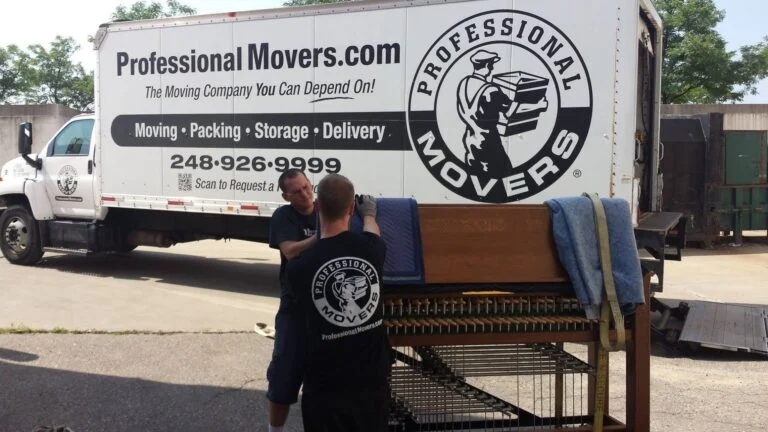
Most moves have at least one item that keeps the homeowner up at night. An antique armoire passed down through three generations. A painting purchased at a Detroit gallery has appreciated significantly. A grand piano that took years to acquire. A safe that weighs as much as a refrigerator.
These items have something in common: standard moving practices are not enough for them, and working with careful movers who treat specialty items as exactly that, rather than just another load, is what keeps them arriving intact. This guide covers how to approach high-value and antique items correctly, what questions to ask your mover, and what documentation you need before anything leaves your home.
Why High-Value Items Require a Different Approach
A standard residential move accounts for furniture, boxes, and appliances. The crew wraps everything in moving blankets, loads the truck efficiently, and moves at a pace that keeps the job on schedule.
High-value items break that formula. A Tiffany lamp cannot be wrapped the same way as a table lamp. A grandfather clock requires the disassembly of the pendulum and weights before it is moved, or the movement will be damaged. An oil painting cannot be mounted to the wall of a truck without proper crating, or it risks pressure damage, even without a visible scratch.
The cost of getting this wrong is not just emotional. Fine art, antiques, and musical instruments are often the highest-value items in a home, and some pieces cannot be replaced at any price.
What Counts as a High-Value Item?
Antique furniture deserves extra care if it is irreplaceable, structurally fragile due to age, or constructed with techniques no longer in common use. This includes veneered pieces, painted furniture, and carved wood that can chip or crack under stress.
Fine art includes oil paintings, watercolors, prints, sculptures, and mixed-media pieces, each with its own sensitivities. Paintings can be damaged by pressure, humidity, vibration, and temperature swings, while sculptures present structural risks depending on material and form.
Musical instruments, particularly pianos, are among the most complex items to move correctly. An upright piano weighs between 400 and 900 pounds, and a grand piano requires full disassembly before moving. Collectibles and display items, vintage electronics, and professional audio gear also fall into this category since market or sentimental value significantly exceeds what their appearance suggests.
How to Document High-Value Items Before the Move
Documentation is your protection. It establishes conditions before the move and creates a record for valuation or insurance purposes if anything changes during transit.
Photograph everything in natural light from multiple angles. Include any existing damage, chips, scratches, or repairs, and date-stamp all images. Get appraisals for items of significant value, as an appraiser’s documentation establishes current market value, which matters for full-value protection claims. Many antique dealers and certified appraisers in Metro Detroit can provide written appraisals.
List serial numbers and distinguishing marks for instruments, electronics, and items with unique identifiers. Check your homeowner’s or renter’s insurance policy before move day, since many standard policies cover personal property during a move, but require riders for high-value items.
What to Ask Your Mover About High-Value Items
Not every moving company has the equipment or experience for specialty items, and asking the right questions before booking is the only way to find out.
Ask whether they offer specialty packing for fine art and antiques. Artwork moving services should include specialty packing and handling for paintings, sculptures, and other high-value pieces, with international packing and custom wooden crating available for items that require them. Ask specifically about piano-moving experience, since it requires a piano board, proper straps, and crew members who understand how weight distribution shifts as the instrument is maneuvered.
Ask about the valuation policy for high-value items. Released value protection covers 60 cents per pound per item, regardless of actual value, meaning a 70-pound painting worth $8,000 receives a $42 claim. Full value protection covers repair or replacement at the current market value. For high-value items, the difference between these two options is not theoretical.
How Pianos Are Moved Correctly
A piano is not a large piece of furniture with keys. It is a precision instrument with thousands of internal components, and it responds badly to being handled like one.
Before a piano leaves a room, the lid is secured or removed depending on the type, and all loose components are protected. An upright piano requires a piano board and specialized straps positioned at the correct structural points. A grand piano is disassembled with the legs removed, the pedal lyre removed, and the lid taken off before the body is moved on a piano board. Everything is reassembled at the destination.
Tilting incorrectly, pulling from the wrong point, or rushing through doorways is how damage happens. Piano moving should be treated as a specialty service, not a general moving task with a piano thrown in.
How Fine Art and Antiques Are Protected During a Detroit Move
The protection starts with packing. Paintings are wrapped in glassine paper before anything else touches the surface, then surrounded with foam or custom crating for transport. Frames are corner-protected, and sculptures are wrapped and crated based on their specific dimensions and fragility.
On the truck, art and antiques are loaded last and positioned so nothing applies pressure to them during transit. Items are secured to prevent shifting and kept away from the truck walls, which conduct temperature and vibration. At the destination, specialty items are unloaded first and placed before the general furniture load arrives.
Storage Considerations for High-Value Items
If there is a gap between your move-out and move-in dates, or if you are downsizing and some pieces need time before their final placement, storage becomes a factor.
Standard self-storage units fluctuate with outdoor temperature and humidity, which can warp wood, crack paint, and damage finishes over time. Climate-controlled storage maintains consistent temperature and humidity levels, protecting sensitive materials. Our climate-controlled storage facility in Walled Lake is available for short and long-term arrangements and is designed specifically for items that cannot tolerate standard storage conditions.
Related topics:
- Is Moving to Detroit Expensive?
- Benefits of Professional Movers