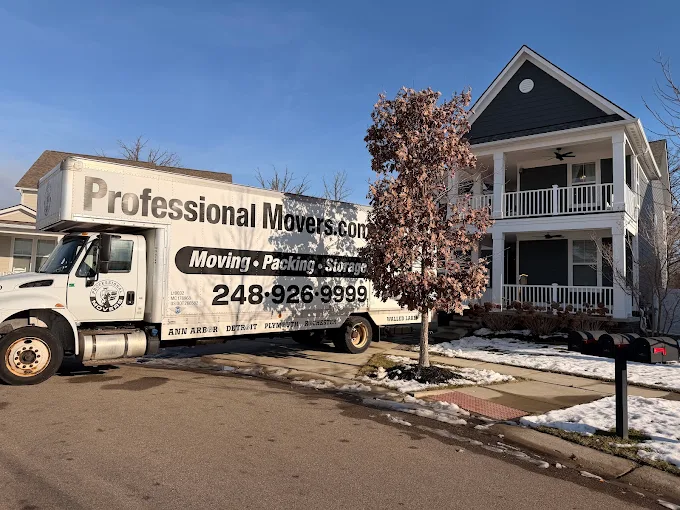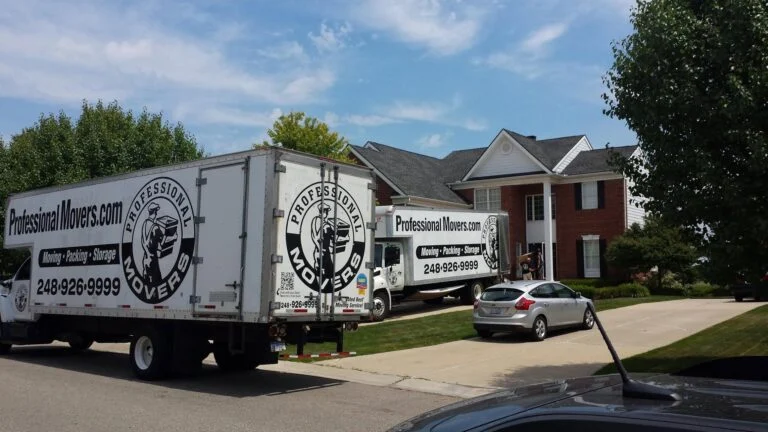

Michigan weather does not consult the calendar you booked around. A move scheduled in April or October in Milford has a reasonable chance of running through rain at one end or the other, and the forecast that looked clear on Wednesday can turn by Saturday morning. Crews who work this region plan for it rather than hope against it.
Working with us through a wet day means the crew arrives already carrying what the conditions call for. Floor runners, additional padding, plastic sheeting, and extra shrink wrap travel on every truck. The preparation that happens on your end still changes the outcome, and our local household moving services page sets out what we handle so you can see where the line sits.
What Rain Does to a Move
The damage people expect from rain is water landing on furniture. That is the easiest part to prevent, and it is rarely what causes the real problem. The bigger issues come from what water does to the surfaces and materials involved rather than to the items themselves.
Cardboard loses structural strength when it absorbs moisture, and it does so faster than most people expect. A box that was rated to carry forty pounds across a dry garage can fail at the seam after fifteen minutes sitting on a wet driveway.
The failure tends to happen mid-carry rather than at rest, which is when the contents are least protected. This is the single most common rain-related loss on a move, and it happens to boxes that never saw a drop of direct rainfall.
Footing is the other factor. Wet grass, a sloped driveway, hardwood that has taken on moisture from repeated trips through a door, and the lip of a truck ramp all become slower to work on.
A crew carrying a dresser down a wet ramp moves deliberately rather than quickly, and that is the right call. It also means a wet move takes longer than the same move in dry conditions, which is worth building into your day rather than discovering at four in the afternoon.
Protect Entryways, Floors and Walkways First
The entry points take the heaviest traffic on any move, and in rain they take the water too. Every trip through the door brings moisture onto the floor inside, and by the twentieth trip a hardwood entry is wet enough to be both a slipping risk and a finish problem.
We pad door jambs and roll out neoprene runners along the main carry paths as part of the setup on every job. Where homeowners add real value is in the areas just outside that footprint.
A second doormat inside the door, old towels laid at the transition point, and a dry space where crew members can set something down briefly without it touching a wet surface all help. If you have a mudroom or an attached garage, clearing it completely turns it into the most useful room in the house for the day.
Outdoors, think about the route rather than the destination. The wider work of getting your home ready for moving day covers this ground in more depth. If the path from the door to the truck crosses grass, it will churn, and a heavy item carried across soft ground is harder to handle.
Plywood sheets or boards laid along that route give a stable surface and keep mud off the load. Milford properties often sit on larger lots with longer approaches than a subdivision home, so the walk from door to truck can be substantial, and shortening or firming that route is worth doing the day before.
Pack With Moisture in Mind
Standard packing assumes a dry day. A few adjustments made in advance hold up much better when the day is not dry, and most of them cost nothing beyond a roll of plastic.
- Line the inside of boxes holding paper, books, or textiles with a plastic bag before filling them
- Seal electronics in plastic first, then pad, rather than padding alone
- Use plastic bins rather than cardboard for anything going into a garage, shed, or basement that may sit on a damp floor
- Wrap upholstered furniture in plastic over the moving pad, since a pad alone holds water against the fabric
- Keep mattress bags sealed rather than open at one end
- Pack a dry change of clothes and towels in a bag that travels in your car
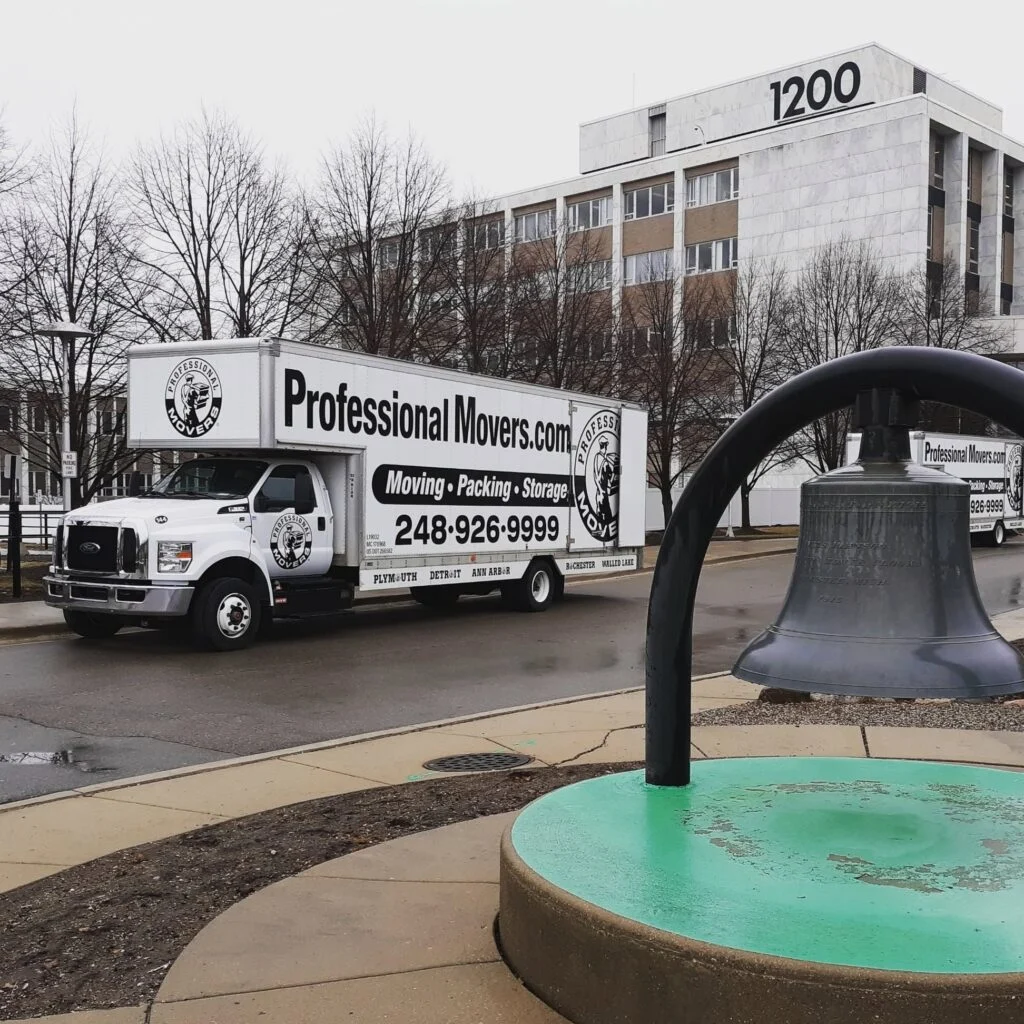
Reusable plastic crates handle wet weather considerably better than cardboard, which is one reason they come up often for moves booked in the shoulder seasons. They stack without deforming, they do not absorb anything, and they can be set down on a wet surface without consequence.
Our packing crews work with materials matched to the item being packed, which matters more on a wet day than a dry one.
Leave the last few boxes open until the morning of the move if rain is forecast. It gives you the option of moving a few moisture-sensitive items into your own vehicle rather than onto the truck, and that decision is easier to make with the boxes still accessible.
Booking a move during Michigan’s wetter months? A video estimate gives you a written number without waiting for an in-person appointment, and it lets you lock a date before the calendar fills. Schedule yours and get the figures in writing.
Adjust the Loading Sequence for Wet Weather
Load order on a dry day is about weight distribution and space. On a wet day it carries a second job, which is keeping the most vulnerable items away from the doors and the floor of the truck.
Water enters a truck at the back, where the door opens and closes repeatedly through the day, and along the floor, where boots track it in.
The practical response is to place water-resistant items at the rear and along the deck, and to keep upholstery, mattresses, artwork, electronics, and anything cardboard higher and further forward. Plastic bins, appliances, tool chests and outdoor equipment all tolerate the back of the truck far better.
Staging matters as much as stacking. A covered area where items wait before going on the truck means nothing sits in rain during the pause between carries. A garage with the door up works, a carport works, and a pop-up canopy at the tailgate works where neither is available.
Without staging, items queue in the open, and the time they spend waiting is the time they take on water. Set the same thing up at the destination, because unloading into rain carries all the same problems in reverse.
Decide When to Push the Date and When to Proceed
Most rain is just weather. Steady rain, a cool damp day, even a heavy shower that passes through, all are workable with the preparation above and a crew that has done it before. Postponing a move over ordinary rain usually costs more than it saves, particularly if your date is tied to a closing or a lease handover.
The conditions that genuinely warrant a conversation are different. Lightning, which stops outdoor work regardless of anything else. High wind, which makes carrying large flat items unsafe.
Freezing rain or ice, which changes footing from slow to hazardous. Flooding on the approach to either address. If any of those are in the forecast, call us, and we will talk through the options rather than leaving you to guess.
If your timing has any flexibility at all, tell us when you book rather than on the morning. Knowing in advance that a date could shift by a day gives us room to work with, and it is a far easier conversation than one held at seven in the morning with a crew already loaded. Flexibility told to us at booking is flexibility we can use. Flexibility discovered on the morning is not.
Rain on moving day is an inconvenience that preparation turns into a non-event. The households that come through it well are the ones that spent an hour the day before laying boards, clearing a garage, and sealing a few boxes.
Get your Milford move scheduled before the calendar tightens. Book a free video estimate, and we will put your numbers in writing, with a crew size set against what the job actually needs.
Related Topics:
- Old Home Checklist in Birmingham, MI
- Stay on Schedule in Northville, MI