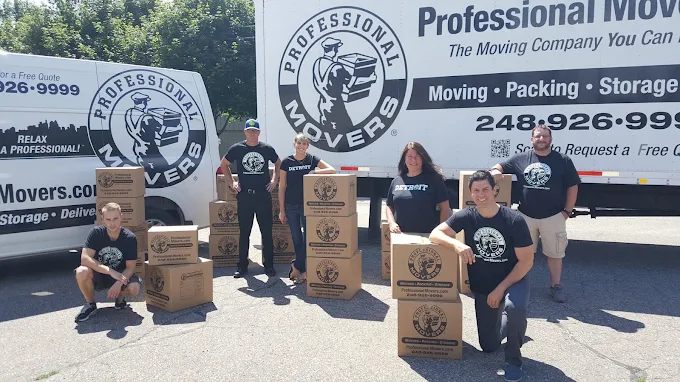
A refrigerator still running the night before a move arrives with meltwater pooled in the bottom, and a washer nobody drained leaks across the boxes stacked beside it. Appliance damage traces back to preparation that did not happen far more often than it traces back to the carry itself. We have been moving appliances out of Novi, MI kitchens and laundry rooms since 1978, and as a professional moving company staffing roughly 40 background-checked W-2 movers, we send the crew your Moving Consultant scoped rather than whoever was free that morning. Each of those consultants worked as a mover first, so the equipment your job needs is decided before the truck is loaded.
What follows splits three ways: the preparation that belongs to you, the handling that belongs to our crew, and the steps that have to wait until everything is standing in the new house.
Why Appliances Need Different Handling Than Furniture
A sofa is heavy and awkward, and that is the whole of the problem with a sofa. An appliance adds mechanical parts that fail quietly when the unit is handled wrong. A refrigerator tilted past its limit can starve the compressor of oil. A washer drum that was never stabilized can crack its own suspension on the first rough stretch of road.
Clearance is the other half of it. A full-size refrigerator has to clear a doorway, turn a landing, and come down stairs without taking paint off the wall or a corner off itself. Our crews plan that route as part of our residential moving services, and the protective equipment comes off the truck before the appliance does.
The kit for an appliance carry is specific:
- Appliance dollies with stair-climbing straps
- Furniture sliders for tile and hardwood
- Moving blankets and stretch wrap
- Neoprene floor runners and door jamb protection
- Ratchet straps to secure each unit against the truck wall
If you own something oversized or unusual, say so during the estimate. The right equipment then gets assigned to the job instead of improvised on the day.
What You Should Do Before Moving Day
Appliance prep belongs to you, and the gap between a prepared kitchen and an unprepared one usually shows up as an hour of crew time. Most of it has to happen the day before rather than the morning of, because defrosting and draining both take longer than people budget for. The same logic runs through everything we tell homeowners about what to do before movers arrive.
Refrigerators and freezers should be turned off and defrosted at least 24 hours before moving day. Empty them completely, clean the inside, and leave the doors open while they dry. Before loading, the doors should be taped or secured shut.
Washing machines should be drained completely before moving. Run a cleaning cycle, remove water from the drum and hoses, and dry the inside. If you still have the original transport bolts, reinstall them to stabilize the drum.
Dryers should be disconnected from power before the crew arrives. For gas dryers, the gas line must be disconnected by a licensed professional before moving day. The gas line should also be reconnected by a certified technician at the new home.
Ranges and ovens should be cleaned before moving. Remove the racks and pack them separately with paper or padding. Gas ranges also need a professional disconnection before the crew arrives.
Dishwashers need extra planning. Freestanding units should be drained and dried. Built-in dishwashers should be discussed during the estimate because disconnection should not be left until move day.
If you are unsure which of your appliances need a licensed disconnection, raise it when you book the estimate. A Moving Consultant can tell you what our crew handles and what needs a technician scheduled ahead of your date.
Our Crew’s Responsibilities on Move Day
Once your prep is done, the carry is ours. Floor runners and jamb protection go down before a single appliance moves, because the damage that happens on an appliance job usually happens to the house rather than to the unit.
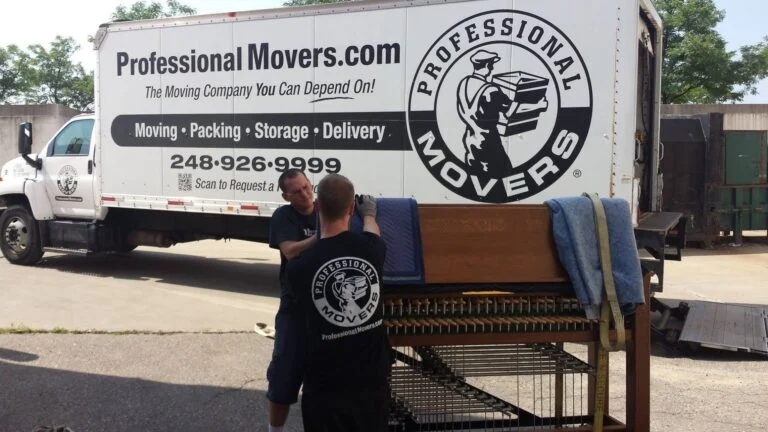
Each appliance gets blanket-wrapped before it goes through a doorway or a tight turn, and the crew works it onto a dolly rather than walking it on its corners. Load order matters just as much. Refrigerators, washers, and dryers go on first, because they build the flat wall the rest of the load leans against for the drive.
From there, it is protecting the route, securing each unit against the truck wall, and setting it in the right room at the other end with the blankets pulled once it is standing. The goal is not getting the appliance onto the truck. It is getting it off again with the appliance, your floors, and the boxes packed around it all intact.
The Appliances People Forget to Mention
Some appliances never come up during the estimate because nobody thinks of them as appliances. They still need the same preparation, and one or two need specialty equipment on top of it.
Chest freezers in a Novi basement or garage are the most common miss. They defrost, drain, clean, and dry exactly like a kitchen refrigerator, and the lid needs securing before the unit moves.
Over-the-range microwaves are mounted to cabinet brackets. They cannot be moved like a countertop microwave unless they are detached first. Confirm during your estimate whether the unit is staying with the home or coming with you.
Wine refrigerators and beverage coolers should be emptied, powered off, cleaned, and dried before moving. Treat them like standard refrigerators, even if they are smaller.
Reconnecting Appliances at the New Address
Nothing gets plugged in the moment it lands. A refrigerator that rode upright needs two to four hours before power, and one that traveled tilted needs a full 24 hours so the compressor oil drains back where it belongs.
Reconnect the washer, then run it empty while somebody watches the hose fittings. A slow drip behind the machine is far easier to catch in the first ten minutes than in the first month. Check that the dryer vent run is clear before you push the unit back against the wall.
Gas appliances are the exception to all of this. Our crew sets the unit in place and stops there, because the connection itself is work for a licensed technician. Booking that technician for the day after your move keeps the kitchen usable.
If something looks wrong once we have gone, photograph it that day and call us. Your Team Leader files the note while the job is still fresh, and every local move we run carries our 100% Money-Back Performance Guarantee, still the only published guarantee of its kind from a Michigan mover.
Contact Us
Ready to book an appliance move in Novi? Our team is available Monday through Friday from 7 am to 6 pm and Saturday from 7 am to 12 pm, and we are closed on Sundays.
Schedule a free video estimate, and a Moving Consultant will walk your kitchen and laundry room with you over video, then put the appliance list in writing before you commit to anything. Call or text 248-926-9999.
Call or Text 248-926-9999Frequently Asked Questions
Appliances generate more questions than almost any other part of a household move. These are the ones our Novi customers ask most often.
How far ahead should I tell you about a large appliance?
Mention it when you book the estimate, not the week of the move. Crew size, dolly type, and truck space are all set from that conversation. A chest freezer or an oversized range added late can change how many movers the job needs, and during peak season that crew may not be available on short notice.
Do I need to disconnect my gas range myself?
No, but you do need a licensed technician to do it before we arrive. Our crew is not permitted to break a gas connection. Book the disconnection for the day before your move so nothing is waiting on a technician while the truck sits in your driveway.
Can you move a refrigerator that is still full?
No. It needs to be emptied, turned off, and defrosted at least 24 hours ahead, then cleaned and dried with the doors left open. A full unit is heavier than the dolly is rated for, and any remaining ice becomes water inside the truck.
How long before I can plug the refrigerator back in?
Two to four hours if it traveled upright the whole way. A full 24 hours if it was tilted at any point, which is common on stairs and through tight doorways. Powering it up early risks pushing compressor oil into the cooling lines before it has drained back.
What happens if an appliance is damaged during the move?
Photograph it the same day and contact us before anything is repaired or discarded. Your Team Leader records it against the job, and the valuation coverage on your bill of lading determines what applies. Our money-back performance guarantee sits on top of that for local residential moves.
Related Topics: