
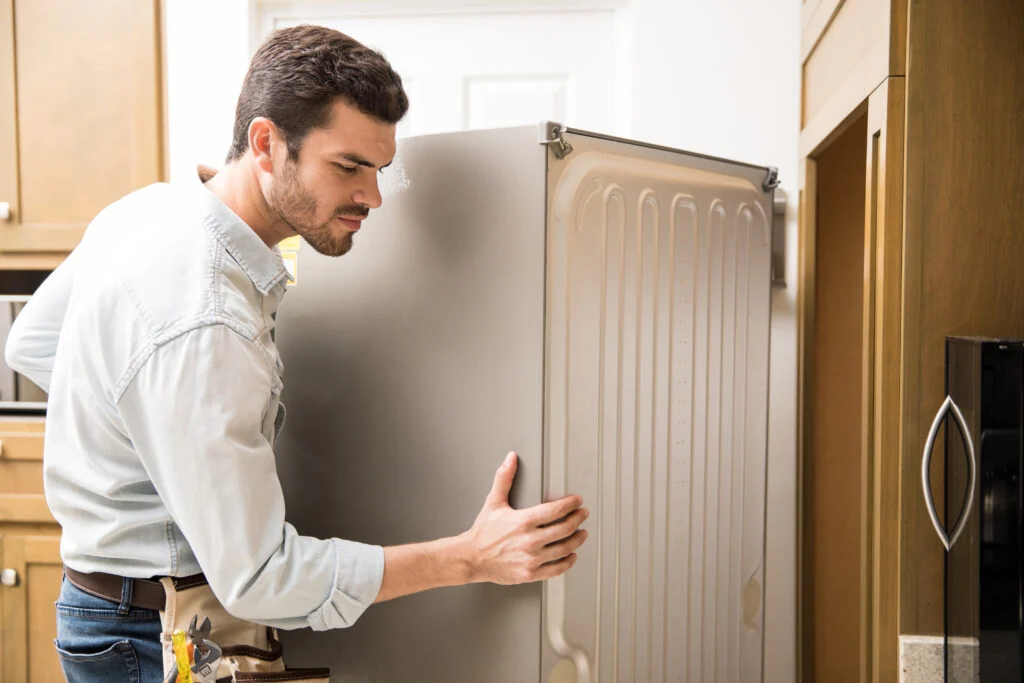
Moving a commercial refrigerator takes more than just muscle; it requires the right approach to avoid damage or injury. Even the best moving company follows specific steps to get heavy appliances from point A to point B without issues. This guide walks through everything from weighing the unit and clearing pathways to disconnecting, lifting, and reconnecting at the new spot. Each step matters when you’re dealing with equipment this size and weight. Follow these tips to make your refrigerator relocation as smooth as possible.
Assessing the Refrigerator’s Weight
Before you try moving the refrigerator, you need to know how much it weighs. Place the scale on a flat, stable surface, and make sure it can handle a weight greater than the fridge is expected to weigh. Carefully lift one side of the unit and slide the scale underneath, then lower it slowly so it rests evenly. Write down the number, then repeat on the other side to double-check. Add both measurements together for the total weight. This number tells you what kind of equipment and how many people you’ll need to move it safely.
Clearing the Pathways
A clear path makes all the difference when moving something this big. Start by removing furniture, boxes, debris, or anything else that could get in the way. Measure the refrigerator’s width and make sure your pathways are wide enough to fit it through without squeezing. Look for low-hanging light fixtures or shelves that may need to be temporarily lowered. Pay attention to floor changes, ramps, or tight doorways that could cause problems. Taking time to clear the route protects both the refrigerator and the walls, floors, and door frames around it.
Securing Necessary Moving Equipment
Having the right gear makes this job way easier and safer. Here’s what you need:
- Industrial-grade moving straps: These keep the refrigerator secure during transport. Look for straps that are strong, adjustable, and rated for the appliance’s weight.
- Heavy-duty appliance dolly: Get one with a strap or harness system and large wheels that can handle different surfaces.
- Furniture blankets or padding: These protect the refrigerator from scratches and dents during the move.
- Furniture sliders: These help you move the unit across smooth floors without straining yourself.
Safely Disconnecting the Refrigerator
Before you move anything, the refrigerator needs to be properly disconnected. Here’s how to do it:
- Turn Off the Refrigerator: Find the power switch or dial and turn it off. This prevents any electrical issues while you’re working on it.
- Unplug the Refrigerator: Carefully pull the power cord from the outlet. Make sure the cord isn’t in a spot where someone could trip over it.
- Secure Loose Cables: Check the back of the unit for any loose cables or connectors. Tape them down or bundle them together so they don’t get tangled or damaged during the move.
Proper Lifting and Moving Techniques
Once disconnected, it’s time to move the refrigerator safely. Bend your knees and keep your back straight when lifting. Never lift with your back. Use a sturdy lifting strap or dolly to help with transport, keeping things stable and making the job easier. Plan your route before you start moving and watch out for obstacles or uneven floors that could cause accidents. If you’re moving with a team, communicate clearly so everyone knows what’s happening. Distribute the weight evenly among lifters to prevent anyone from getting hurt.
Reconnecting the Refrigerator at the New Location
Once the refrigerator is in place, reconnect it properly to avoid problems down the line:
- Electrical Connection: Plug the unit into a grounded outlet and verify that the voltage matches the refrigerator’s requirements.
- Water Supply: If your unit has a water line, connect it tightly to prevent leaks that could damage the appliance or the surrounding area.
- Leveling and Stability: Use a level to make sure the refrigerator sits flat. Adjust the feet if needed; an unlevel fridge can cause uneven cooling or wear out parts faster.
Some of our other moving services include:
Related Topics:
- Questions to Ask Your Team Before an Office Move
- What Is Commercial Moving